Notes on women, work, and everyday systems

Looking closely at the ordinary, and what it reveals about how we live and work.

The smallest things keep revealing the structure underneath.

I've spent fourteen years as a social science researcher, working across culture, women's lives, livelihoods, public health, and financial inclusion, primarily in South Asia, with some work in other parts of the world. Much of that work has been about how people live in systems, how they organise work and their lives within it. In particular how work, care, and responsibility are distributed, and how people are placed within those structures, across households and communities.

Three years ago, I became a parent. And, then again.
What shifted was not only what I was doing, but how I was living.
How I worked.
How I showed up for myself.
How I showed up in the world.
And, alongside that, what I began to notice more closely inside the house.

Becoming a parent changed what I was paying attention to. Not only in terms of care, but in how ordinary routines are structured, and how much of that structure goes unexamined.

The patterns I had studied in the field began to show up in more immediate ways.

In routines that repeat without being named.
In conversations.
In small decisions.
In systems that run without being named.

This site is where I follow those patterns.
Each piece begins with something ordinary. Something specific.
A dataset, a system, a repeated interaction.

And then moves outward, to understand what it reveals about how work, value, how roles are structured, and who is assumed into those roles.

This work is an attempt to make the ordinary legible, and how systems no matter how ordinary can be rethought, not just described.

Latest
Also in progress
Up next Hand drawn line art of a hand reaching into a pocket where a smartphone half-sticks out.
Data essay · 2026

Where are we supposed to put things?

100 garments measured across Bengaluru, comparing pocket sizes in men's and women's lowers.

In build Line art of a woman writing in a notebook with a thought bubble asking how her life compares to other women around India.
Interactive · 2026

Your statistical day.

Enter your demographics. See what the average woman like you spends her 24 hours doing in India.

In build Line art of an unpaid care work ledger with task rows, hours spent, and rupee values left as question marks.
Calculator · 2026

If someone paid you for it.

The replacement-cost calculator for unpaid household work, calibrated to Indian rates.

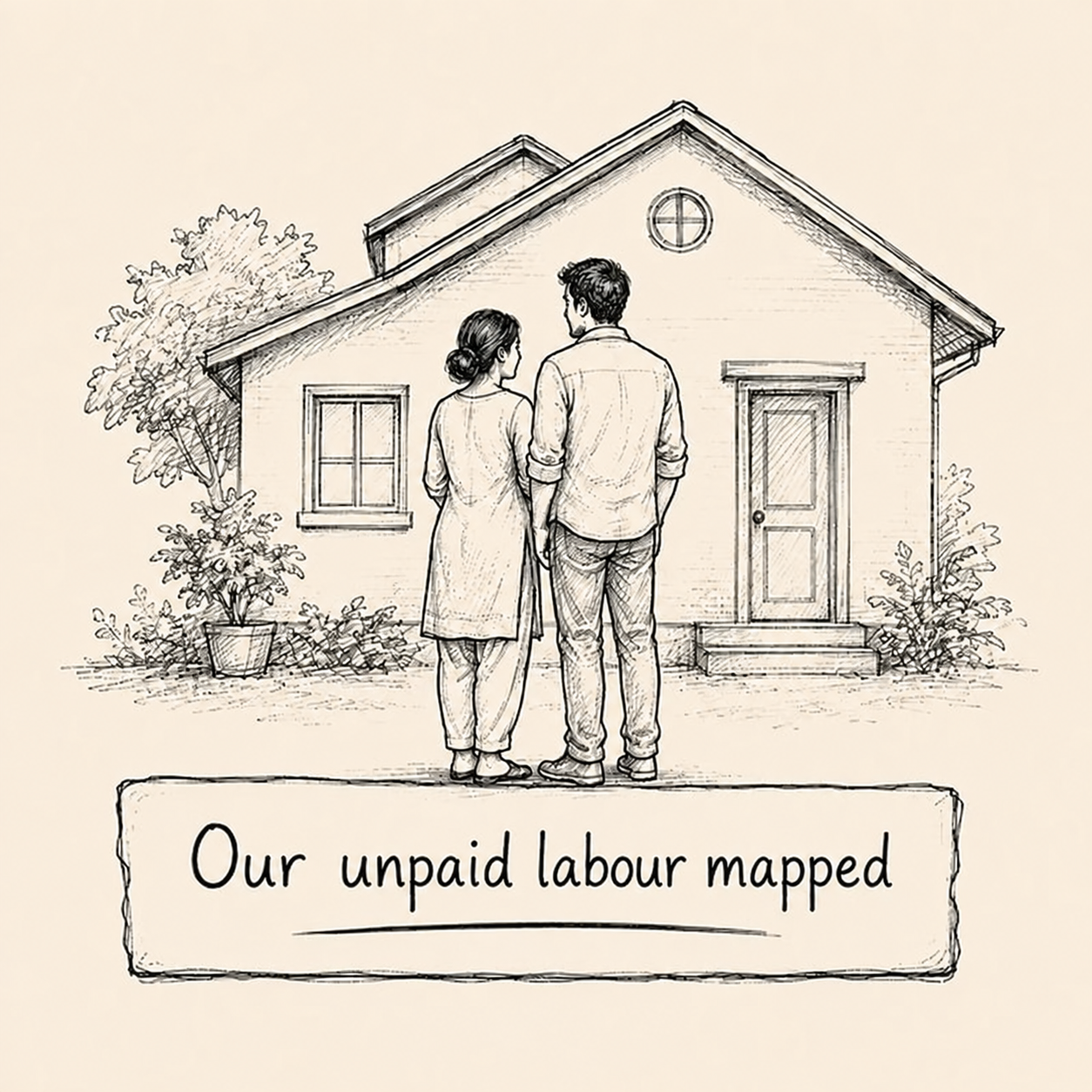
Pilot Line art of a couple standing in front of a small house, with the words 'our unpaid labor mapped' inscribed below.
Tool · pilot opening 2026

Seenathome

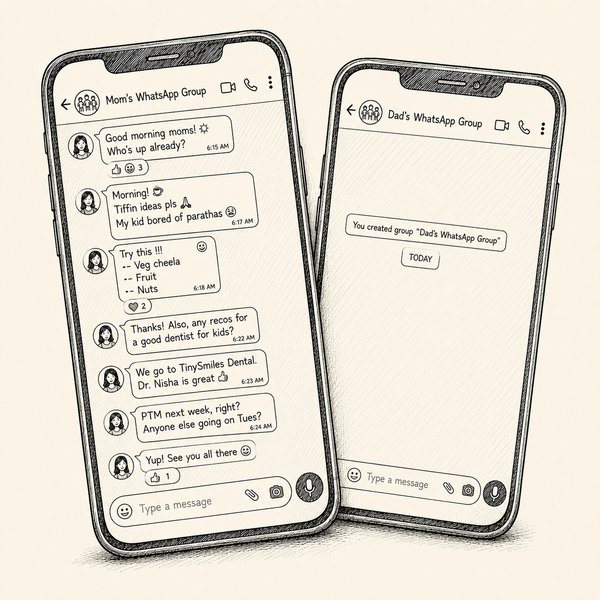
An AI-built tool that maps cognitive load in heteronormative partnerships. Free.

About

I'm based in Bengaluru. Most recently Chief of Staff and Head of Communications and Partnerships at Includovate. Before that, three and a half years as Research & Impact Lead at Sattva, three years at IFMR LEAD at Krea University, and earlier work at the BC Centre for Disease Control and the University of British Columbia. Trained in cultural and social geography, and international relations.

The about page has more, and the contact page is here if you'd like to write to me.